The Role of Flooring in Interior Design: How Your Floor Sets the Tone


The Foundation of Every Room
Interior designers often say the floor is the fifth wall — and in terms of visual impact, it may be the most important one. Covering more surface area than any other single element, the floor sets the tone, warmth, and character of everything that sits above it.
Choose it thoughtfully, and every piece of furniture, every wall colour, and every source of light will benefit. Choose it carelessly, and even the most considered furniture selection will struggle to cohere.
Texture as a Design Tool
The texture of your floor affects how light reads in a space. Matte, wire-brushed, or UV oil-finished timber floors absorb light and create warmth and intimacy. High-gloss lacquered floors reflect light, adding brightness and a contemporary edge.
In rooms with limited natural light, consider a floor with a degree of sheen to bounce light through the space. In bright, north-facing rooms, a matte finish prevents glare and creates a more relaxed atmosphere.
Flooring and Scale
Plank width has a measurable impact on how large a room feels. Narrow planks (less than 120mm) can make large rooms feel busy. Wide planks (180mm+) read cleanly in large spaces and make smaller rooms feel more generous by reducing the number of visible seams.
Connecting Indoor and Outdoor
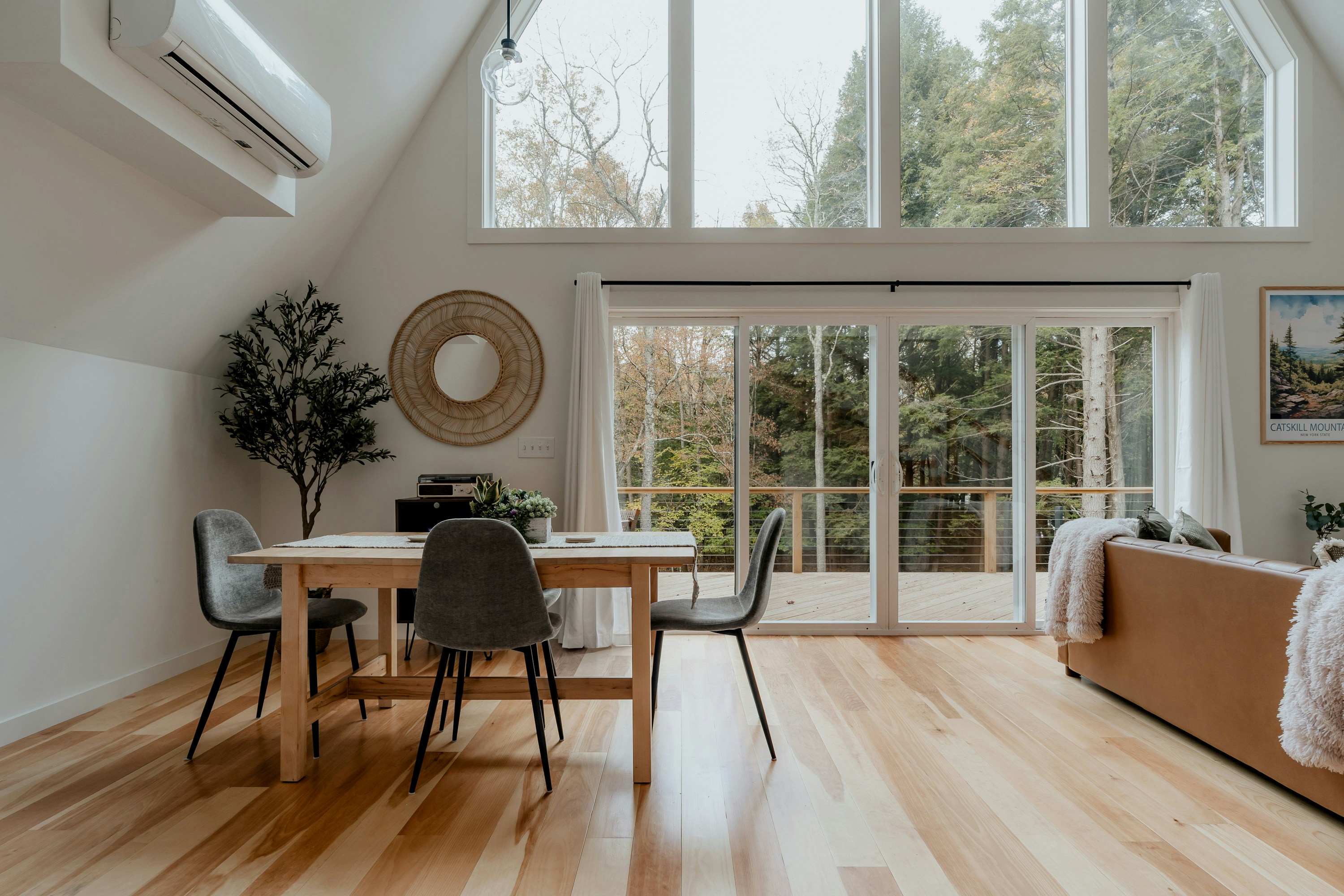
In Australian homes, the connection between indoor and outdoor living is central to the design. Warm, natural timber tones — particularly in mid-to-golden ranges — bridge the transition between interior spaces and outdoor timber decking or landscaping beautifully.
Let the Floor Lead
Many designers recommend selecting your floor before your wall colours and soft furnishings — not after. Starting with the floor grounds the entire design process, ensuring everything else responds to a single, strong foundation.
"The floor is the one element that touches every other. Start there, and the rest of the room tends to fall into place."